


"You were once a creative genius. "
This isn’t a motivational platitude; it is a statistical probability backed by a 10-year NASA study. When Dr. George Land and Dr. Beth Jarman tested 1,600 American children using NASA’s Imaginative Thinking Test, they discovered a breathtaking reality: 98% of 4- to 5-year-olds scored at “genius levels” in divergent creativity.
Yet, as those children grew, their test scores plummeted. By age 10, only 30% retained their creative genius. By age 15, the number dropped to 12%. And by adulthood? A sobering, fractional 2% of us still hold onto that extraordinary potential.
Our natural intuition is to believe that creativity simply fades with age, much like our belief in magic or our tolerance for spinning in circles. But the profound truth is much more unsettling: our creativity didn’t naturally fade. It was systematically smothered.
The Tug-of-War in Your Neurons
To understand where our genius went, we have to understand the two very distinct ways our brains are designed to process the world: **Divergent Thinking** and **Convergent Thinking**.
Divergent thinking is the engine of imagination. It is spontaneous, fueled by inquisitive exploration, and thrives on endless possibilities. It is the exact neural mechanism that allows a child to look at a cardboard box and see a spaceship, or gaze at the clouds and spot a dragon.
Convergent thinking, on the other hand, is the anchor. It is focused, logical, and deeply rooted in judgment. We use it to analyze data, test theories, and make final decisions.
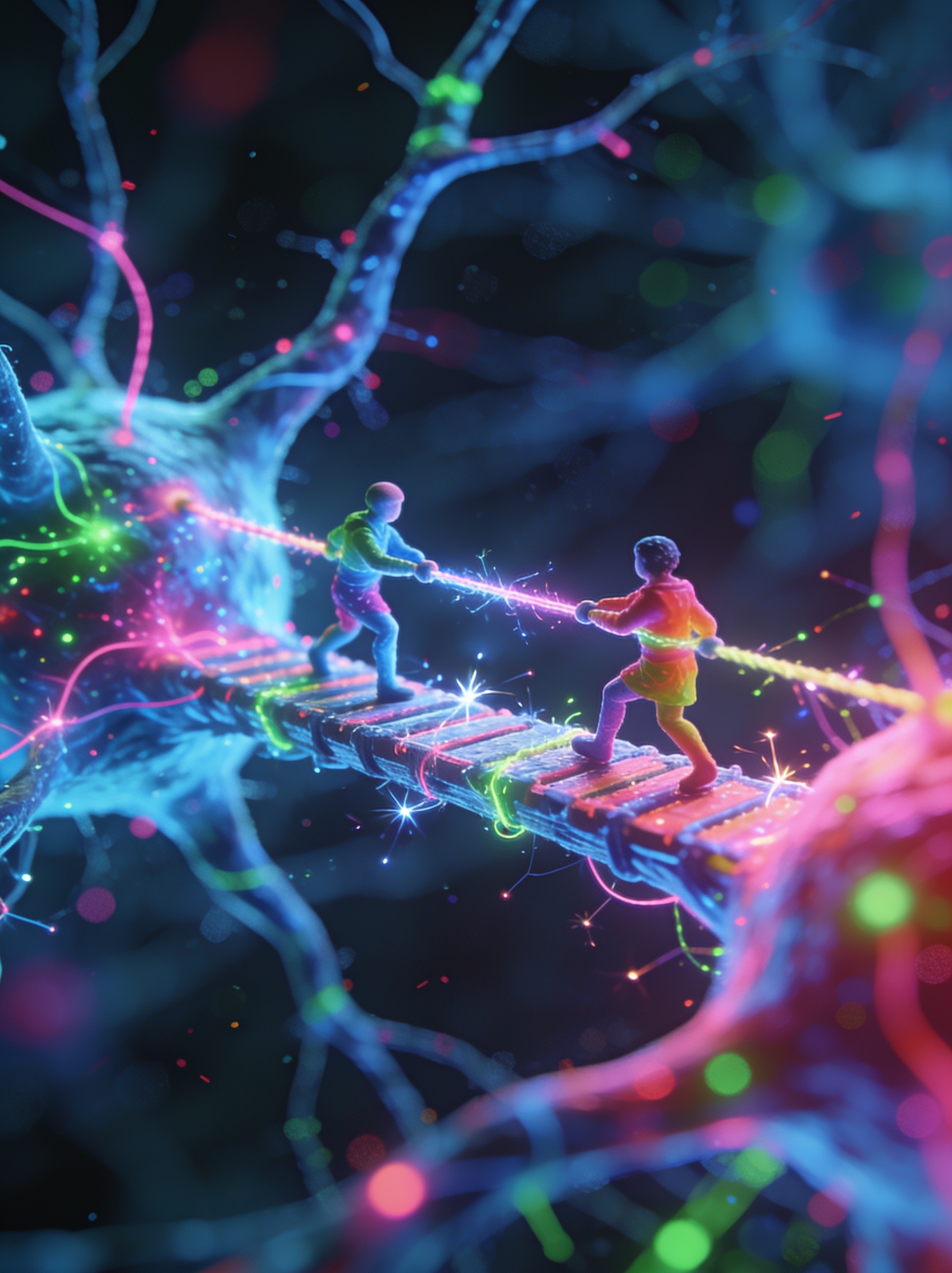
Both are essential. The tragedy, however, begins when traditional education systems and societal norms force us to use both simultaneously. From an early age, we are taught to follow the rules, play it safe, and find the one “right” answer. When a child is asked to be wildly creative but simultaneously critically judged on whether their creation is “correct,” it triggers a mental tug-of-war.
Instead of collaborating, their neurons are forced to compete. This mental friction doesn’t just slow down a child’s brainpower in the moment; as Dr. Land explained in his 2011 TEDx Talk, this constant conflict actually shrinks our creative capacity over time. Curiosity is steadily replaced with compliance, and the pursuit of new ideas is traded for mere memorization.
Why Choose Us?
A choice that makes the difference.
Highly Experienced
Nemo enim ipsam voluptatem quia voluptas sit aspernatur aut odit aut fugit, sed quia consequuntur
Question, Quiz & Course
Nemo enim ipsam voluptatem quia voluptas sit aspernatur aut odit aut fugit, sed quia consequuntur
Dedicated Support
Nemo enim ipsam voluptatem quia voluptas sit aspernatur aut odit aut fugit, sed quia consequuntur
You May Also Like

-
Jun 26, 2026
“How Neuroscience, Dopamine, and Game-Based Learning Shape Better Educational Outcomes.” Children are naturally curious. From stacking blocks to solving puzzles,...

-
Apr 29, 2026
Education is rapidly evolving. Traditional classrooms that rely only on lectures, textbooks, and note-taking are gradually giving way to interactive...
-
Apr 28, 2026
Many children grow up believing that math is difficult, boring, or something meant only for “smart” students. In reality, math...
Sign up to receive our latest updates
Get in touch
Call us directly?
+91 8007614867
Locations
Singapore, Pune, San Francisco
contact@intellia360.com
Need some help?
Popular subjects

- ©2026 Intellia.All rights reserved.